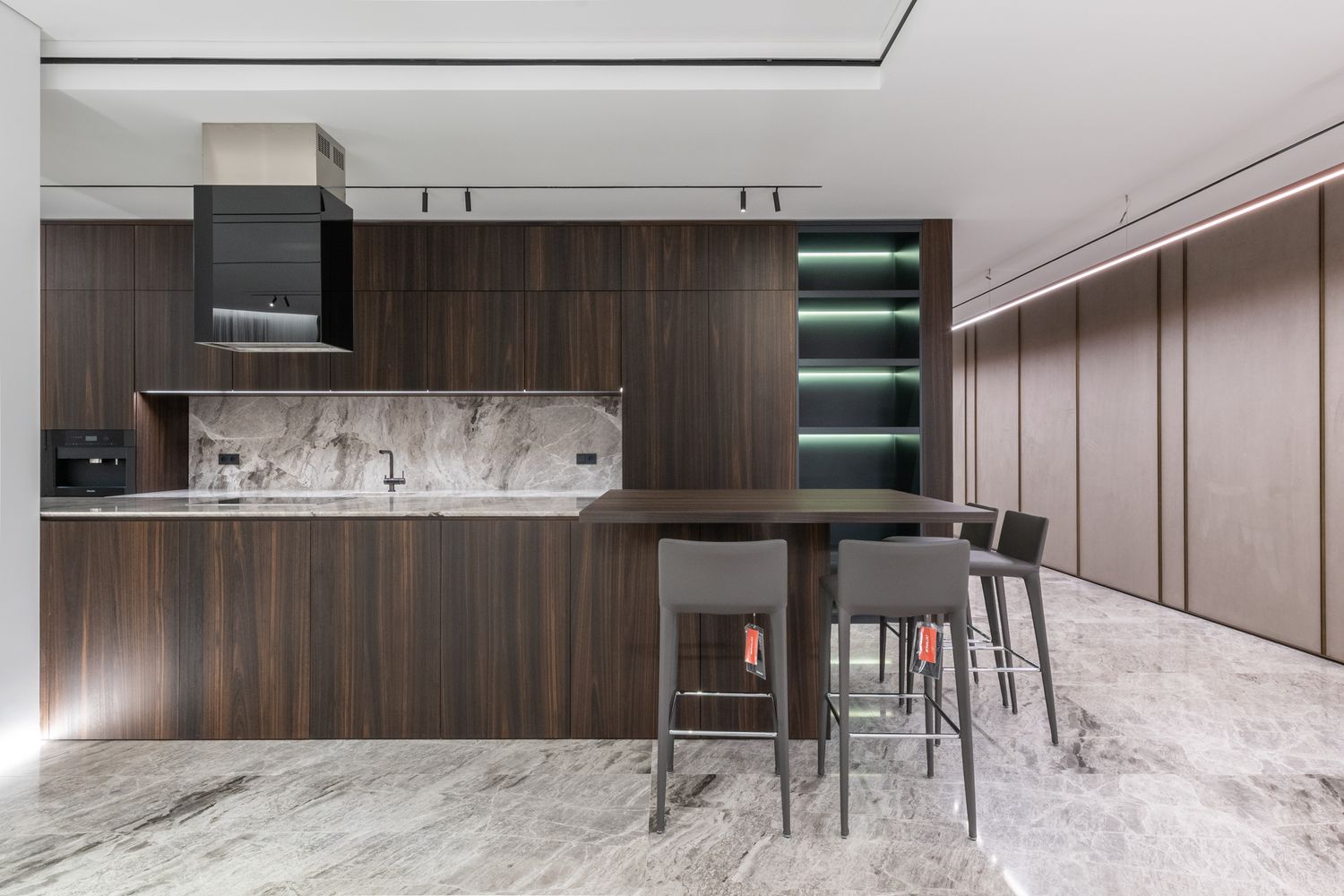
Separate fixed from movable
Plumbing, service routes and permanent joinery form the stable edge of the plan. Tables, screens and loose seating can then change around that edge without requiring a new room each time.
Name the transitions
Describe how the room changes from a working morning to dinner with friends. Where does the laptop go? Which chair moves? If the transition requires clearing every surface, the flexibility may exist only on paper.
Keep a clear route
A flexible layout still needs an obvious route through the room. Test the busiest arrangement, not just the most spacious one. A table pulled out for guests should not block the entry.